
August 29 Student Mixer
Hey YMCA family!! Last week, our Hawaii Youth and Government started off the 26-27’ year with a student mixer, where I got to meet students from across Oahu interested in Youth and Government. There, we hung out, introduced ourselves, our interests, and why everyone wanted to join YAG.
We got to play fun icebreaker games like Dolphin Trainer, Ping Pong, and played around the most with a little timer.
But the most fun part was the scavenger hunt. Split up into groups of 4, students tried to find clues to finish a code, all related to government and advocacy. In the end, all the clues pointed to the upstairs conference room, where food and drinks were available. Though my group (Kingston and Kevin), the supposed “experienced” ones, were the last to finish, it was still a really fun game that ended with amazing food. While eating, everyone also got a rundown of the workshop schedule, other national opportunities, and organization partners like Girls State (wish there was a Boys State too). This mixer proved to be an overwhelmingly fun day that allowed me and students alike to meet new friends and get excited for the future of Hawaii YAG. So excited for the September workshop!!
With Aloha,
Youth Governor Nguyen
My Experience at the 2026 Youth Governor’s Conference
Hey YMCA family!! This is Jacob, your Youth Governor. I am so grateful to have attended GovCon in DC from June 7th to 12th, and I am thankful for all the support I’ve been given. This was the best experience of my life, and I’ll try not to write a novel in this blog, but here is my experience at the 2026 Youth Governor’s Conference.
Day 1 (Sunday, June 7)
I landed in D.C. and checked in at the Embassy Suites by Hilton around 4ish. Registration ran all day as people arrived. I was placed in Family Group 1, aka the Sillies, with group leaders CC and Laura, the best leaders. My roommates for the week were Noah from Kansas and Tyler from Illinois.
That evening we had a welcome dinner and a group icebreaker, followed by a session called Leadership Styles with Laura Rodriguez.
Day 2 (Monday, June 8)
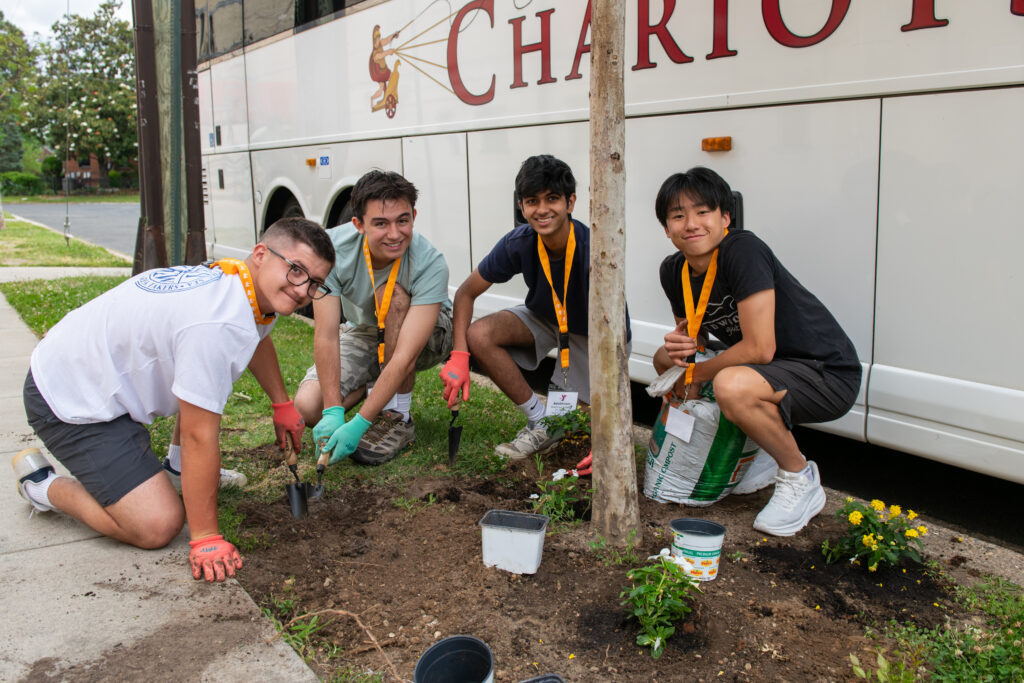
We spent the morning at a service project at YMCA Calomiris, planting soil and plants, painting, and refurbishing books. In the afternoon, we had a session on YMCA Youth and Government history with Ryan Bean, the YMCA archivist, followed by YAG Program Breakout Discussions comparing how different states run their programs, and a Mock Interview Session with Victor Rivera.
That night we did a walking tour of D.C., covering every monument, EVERY monument, along with the White House, the Supreme Court, the Library of Congress, and the federal executive department buildings. It was truly a spectacle, going from looking at Google photos on my phone to seeing the real-life buildings and sculptures with my own eyes.
Day 3 (Tuesday, June 9)
Morning sessions included a Networking Workshop, a session called CoGenerate, and a fireside chat with Suzanne McCormick, President and CEO of Y-USA, and Andre Robinson, President and CEO of MissionSquare.
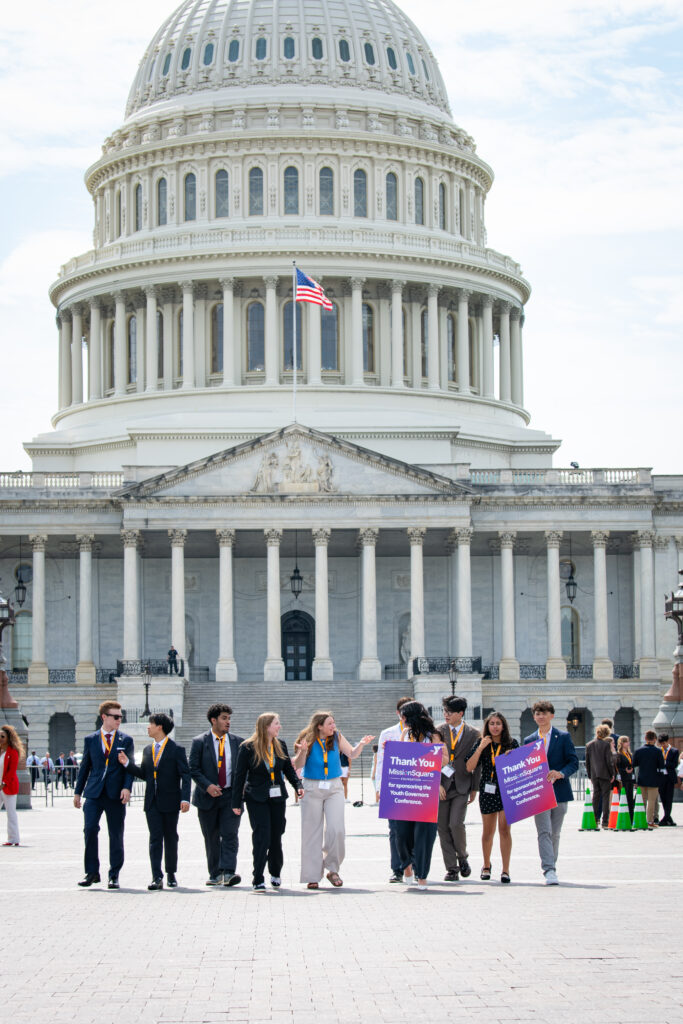
In the afternoon, we took photos on the Capitol steps and attended a Youth and Government Alumni Panel on Capitol Hill. That evening, I got pinned in a ceremony on Capitol Hill, followed by dinner in the Pelosi Caucus Room, where I talked with alumni and people who work on Capitol Hill. Walking onto the stage and looking across the room, I felt an overwhelming sense of pride and appreciation for where I was: IN THE CAPITAL OF THE USA. I never imagined I would be where I was. This day was the most special, and it opened the door to what YAG meant for my life.
Day 4 (Wednesday, June 10)
We took the train from Union Station to the Capitol for a full tour led by a Youth and Government alumnus. We saw the Rotunda, Statuary Hall, the old Supreme Court chamber, the crypt beneath the dome, and the statue of King Kamehameha.
After the tour, we went to the American History Museum, then took the train back to Union Station, where we got food, shopped, and spent the afternoon in the Mall area. We headed back to the hotel to get ready for the Congressional Baseball Game.
To be honest, the other governors and I didn’t really watch the game. Instead, we went around enjoying the free stuff from the tents people were offering. By the time the game was done, we had three bags filled with hats, pens, bags, and other DC-inspired ornaments.
Day 5 (Thursday, June 11)
We had our final Family Group session and closing activities, including writing a letter to our future governor. Lunch followed, and departures were scheduled to begin after that.
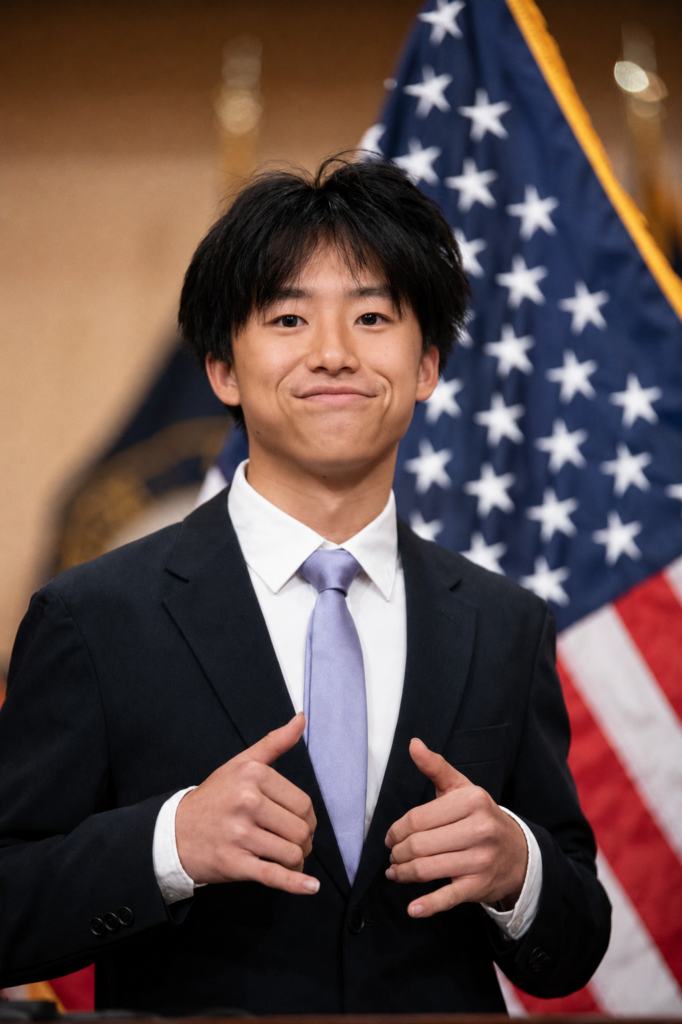
The trip was over, and it only hit when I waved my last shaka to the governors in the lobby. On the car ride to the airport, a ping of nostalgia hit me. I realized that the most special experience of my life was over, but I had never been so thankful.
I reflected on the amazing friends I met, places I went, and the special hotel food that I still think about. Boarding the plane, I took in the last air of DC. I had to be corny. Then I stepped on the plane.
Day 6????
SIKKE.
Just when I thought I would get home, my flight got cancelled, along with several other Youth Governors’ flights. A group of us ended up staying an extra night where we ate pizza, caught up, and finally went to bed.
The next morning, I boarded my flight (actually) and flew back to Honolulu, ready to change the future of the YAG Program in Hawai‘i.
Writing this and looking back on the trip, I truly appreciate how incredible this experience was. Never in my life would I have thought I would get to experience D.C. and meet people from all over the nation who share the same passions as me.
Truly, Hawai‘i Youth and Government has paved the way for a once-in-a-lifetime opportunity. I hope this blog inspires others joining this program to have the same excitement I did during GovCon 2026.
Governor’s Office 2026 Meeting
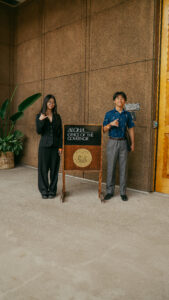 On June 4, Youth & Government Rep. Qian (Bill of the Year Recipient) and I, Rep. Nguyen (Youth Governor), got the opportunity to talk with staff members from the Office of the Governor at the Hawaii State Capitol. It was a pleasure to meet Will Kane (Senior Advisor) and Angie Chapman (Policy Analyst), who introduced us to the Governor’s Office on the 5th floor of the Executive Chamber.
 Opening the meeting, I was able to give an overview of the YMCA YAG program – its history, vision for the youth, and the opportunities the 2026 MYL gave other students and me. I talked about the different professionals the program connected us with. We continued discussing the workshops students attended, research preparations for bills, and debating at the Capitol. I had the chance to talk about my bill aimed at creating an internship program in state departments.
Rep. Qian also expanded on the program, explaining her research on solar technology and her award-winning bill. She delivered a compelling speech and proposed how her bill would give homeowners access to more affordable solar technology. Both Will and Angie praised the bill’s detailed research and ambitious vision, also pointing out Governor Green’s solar tax credit plan.
Will and Angie also shared their story working for Governor Green and gave inspiring advice to us for our future as civic leaders. They praised all delegates for their passion and growing leadership in YAG, and pushed us to continue our journey for a youth voice.
With the meeting coming to a close, we discussed further opportunities from the Governor’s Office with the YAG program. Both Will and Angie were happy to connect with government contacts and hoped to stay in touch for further opportunities.
Concluding the meeting, final pictures were shot in the Governor’s Ceremonial Chamber, and state pins were passed out. We showed our gratitude toward Will and Angie, thanking them for the opportunity to share about YAG and their passion for civics.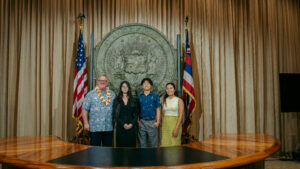
With this meeting, Rep. Qian and I were excited to continue our growing leadership and dedication to amplifying youth voices in civics. With next year’s Youth & Government program coming soon, I am looking forward to continuing growing opportunities for youth voice, civic engagement, and leadership across Hawaiʻi.
With Aloha,
Youth Governor Nguyen
2026 Model Youth Legislature
On April 25th, 2026, five students representing different communities across Oahu came together at the Hawai‘i State Capitol to debate and vote on legislation they developed over the last month. The topics varied from environmental to individual rights, with each student prepared to speak on behalf of their bill.
 Preparation began a month earlier, with delegates attending a series of workshops designed to build the skills and knowledge needed to navigate the legislative process. This included meeting a former Governor, a member of the Attorney General’s legal team, and even being sponsored by Uniqlo to help them become true delegates.
Opening remarks were provided by Hawai‘i State House of Representatives Representative Perruso. Her remarks emphasized representing their communities, thoughtfully challenging legislation, and embracing servant leadership.
The session opened with a proposal to expand high school internship opportunities across 18 government departments. Representative Nguyen fielded challenging questions with clarity, outlining how the bill would strengthen both student pathways and existing initiatives like the Hele Imua program.
Following this, the role of chair rotated among the students, giving each the opportunity to lead proceedings and guide debate.
The second bill, presented by Representative Ng, looked to tighten restrictions on the minimum age of marriage to protect minors. This passed with a majority, despite questions around religious freedoms and the impact this might have across state lines.
 The most fiercely debated bill on the regulation of firearm ranges, by Representative Lowe, saw discussion around the Second Amendment and consideration for Hawai‘i’s current gun safety. Following amendments, the bill proposed raising the minimum age for firearm range use to 25, while also expanding the types of weapons permitted in controlled settings to support proper training.
Representative Kruse introduced a proposal aimed at addressing Hawai‘i’s high shipping costs and cost-of-living challenges. The proposal faced challenges in avoiding federal jurisdiction while also presenting a clear, workable solution that legislators could support.
Finally, Representative Qian delivered a compelling speech to promote a bill that would make homeowners’ access to solar technology more affordable. With amendments helping to tackle the circumstances of low-income or high housing need, this bill, which was voted Bill of the Year, passed without opposition.
This year’s delegates experienced firsthand the challenges and rewards of the legislative process, from developing ideas to defending them in debate. As the program continues to grow, we look forward to seeing even more young leaders step forward to shape the future of their communities.